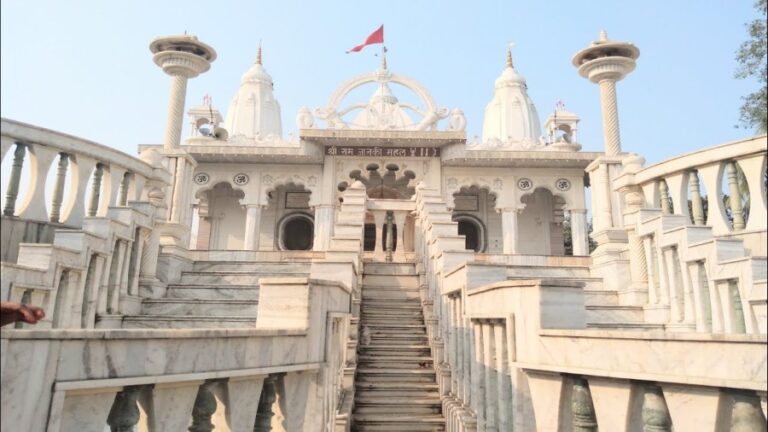
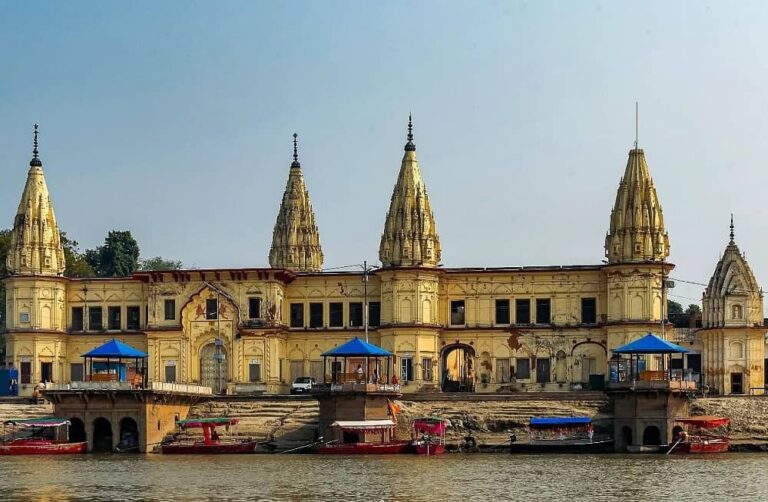
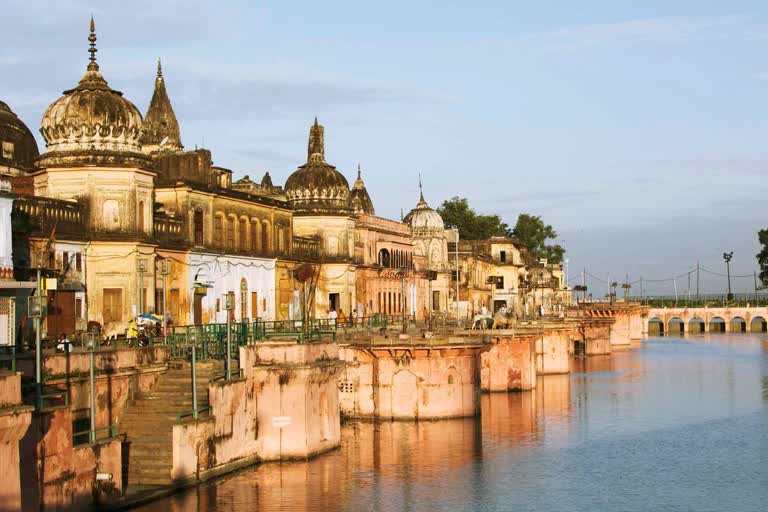
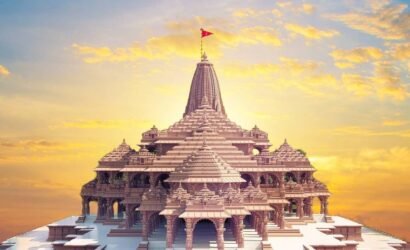
With so many famous places to visit in Ayodhya, planning a trip to this sacred city becomes a worthy experience. Known for its ancient temples, palaces and mesmerizing ghats, Ayodhya welcomes devotees and tourists from all over the world. Among its many famous places to visit, Ram Janmabhoomi—also known as Ram Mandir—stands out as the heart of Ayodhya’s religious landscape. So Whether you’re visiting for spiritual peace, a love for history, or just to explore North India’s rich culture, Ayodhya has something for everyone. From beautiful temples and riverside ghats to museums—here are the top 20 places you must visit in Ayodhya.
When planning places to visit in Ayodhya with family, these attractions should be at the top of your list:
1. Ram Janmabhoomi (Ram Mandir)
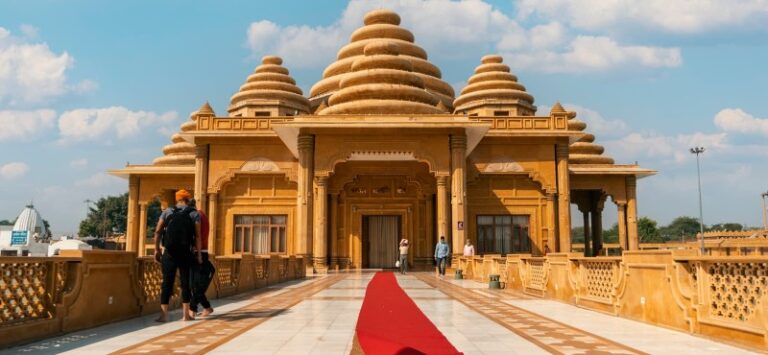
Ram Mandir stands on the bank of the Saryu River in Ayodhya. It is home of Lord Rama in his five-year-old form and is considered sacred by Hindus who believe it marks the birthplace of Lord Rama. The three-story temple showcases magnificent Indian architecture in the traditional North Nagara style. If Ram Mandir is on your travel list, check out our complete guide to Ram Mandir darshan, to know more about temple timings, VIP darshan and ticket prices.
2. Hanuman Garhi
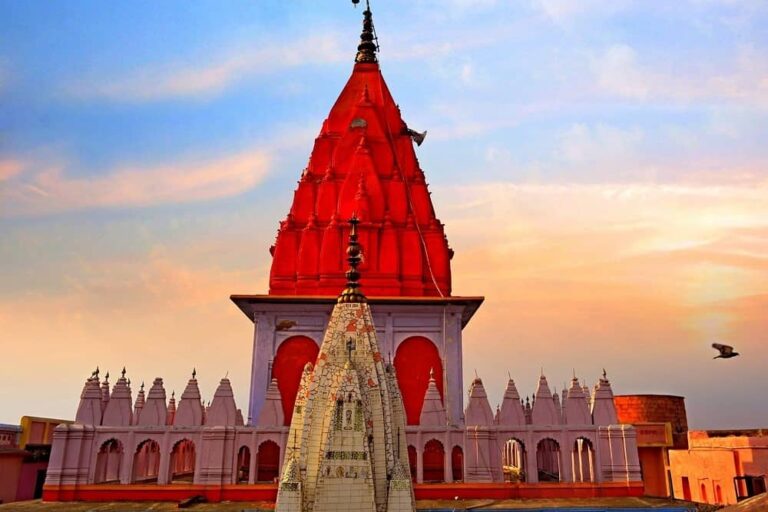
Among the most iconic places to visit in Ayodhya, Hanuman Garhi is a famous Hindu temple dedicated to Lord Hanuman, located near Ram Janmabhoomi Temple. Devotees believe that you should visit Hanuman Garhi after darshan of Lord Rama. According to the Skanda Purana, Lord Hanuman lived in this cave to protect Ram Mandir after Lord Rama and Mata Sita returned to Ayodhya following their victory over Ravana.
3. Kanak Bhawan
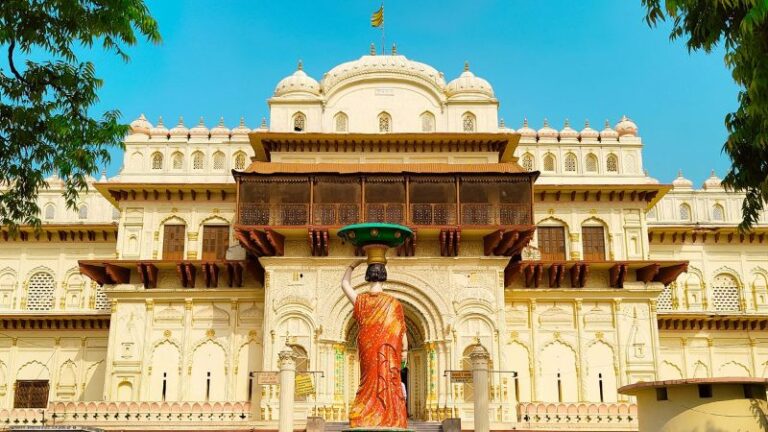
Kanak Bhawan is one of the most famous places in Ayodhya after Ram Janmabhoomi. It is believed to be the personal palace of Lord Ram and Mata Sita, featuring gold-coated walls with a silver roof (hence the name “Kanak,” meaning gold). Located in the northeast of Ayodhya, devotees believe kanak bhawan was a gift from Mata Kaikeyi to Lord Ram and Mata Sita after their marriage.
4. Saryu Ghat
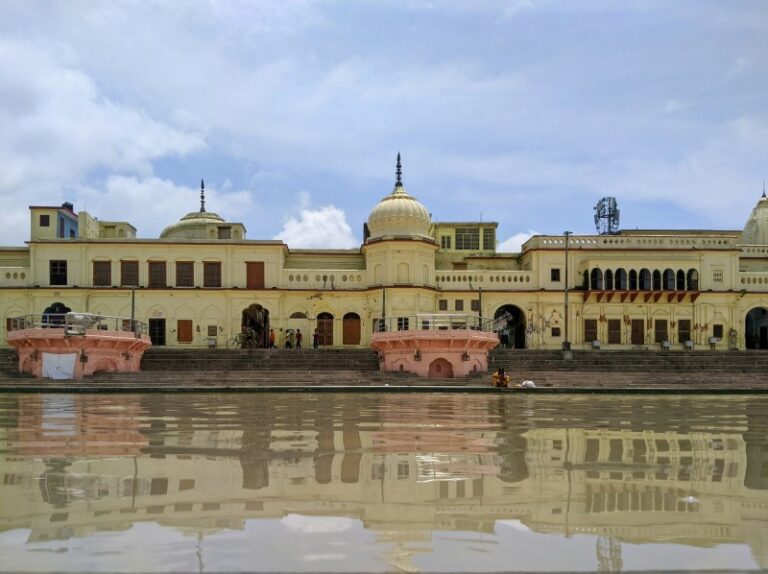
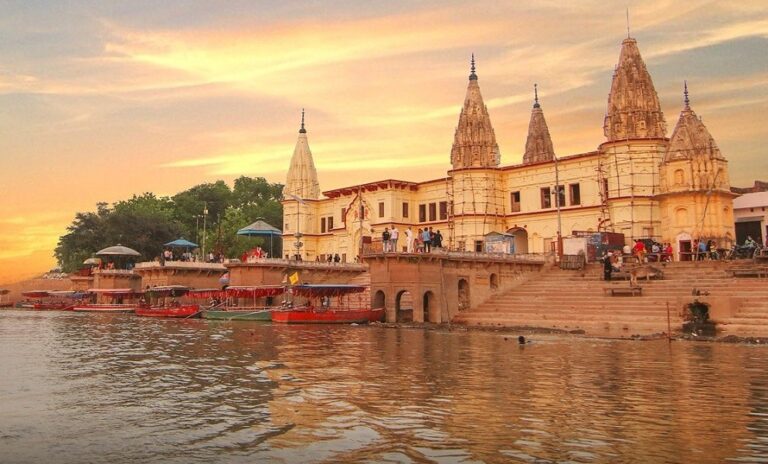
The Saryu Ghat offers a peaceful setting on the banks of the Saryu River and is one of the famous places in Ayodhya to visit. Visitors to Ram Mandir typically take a holy dip in the river before entering the temple for darshan. This place holds special significance as it is mentioned in the holy Ramayana. A Lord Shiva Temple is also located on the other side of the ghat, and visitors can reach there by enjoying a boat ride on the river.
5. Dashrath Mahal
This ancient site in Ayodhya represents the palace of King Dashrath, father of Lord Rama. Known as the “Heart of Ayodhya,” Dashrath Mahal features stunning royal architecture and is located just 50 meters from Hanuman Garhi Temple. If you are seeking places to see in Ayodhya with historical significance, this beautiful mahal is a must-visit.
6. Treta Ke Thakur Temple
Dedicated to Lord Rama (the God of Treta Yug), this temple is situated on the bank of the Saryu River. The temple is only open once a year during the month of Kartik on Shukla Ekadashi. The deities of Lord Rama, Laxman, Lord Hanuman, and Mata Sita are carved from black stone. No special fee is required for entry.
7. Nageshwarnath Temple
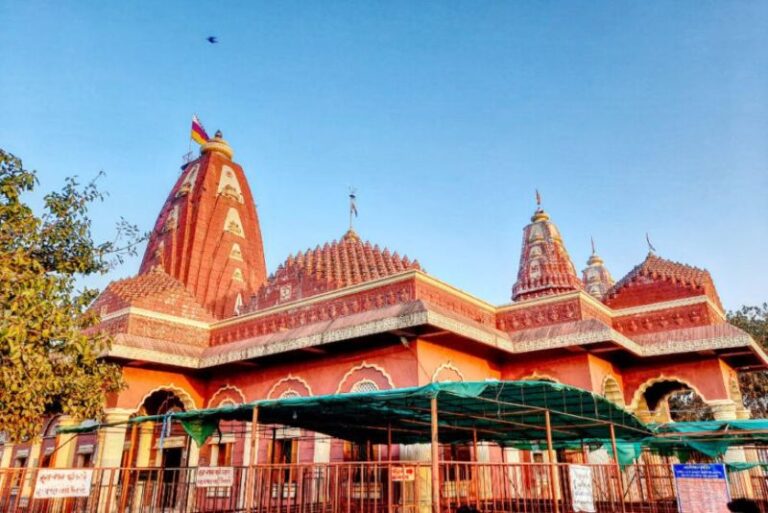
For those looking for places to visit in Ayodhya Dham with spiritual significance, the Nageshwarnath Temple, dedicated to Lord Shiva, is located in Ram ki Paidi, Swargadwar, Thari Bazaar, Ayodhya. It’s just 3 kilometers from Ayodhya Junction railway station. According to legend, the temple was established by Lord Ram’s son, Kush. It attracts many devotees during Maha Shivratri.
Timings: 5 AM – 8:30 PM
Aarti: 5 AM – 6 AM & 8 PM – 8:30 PM
8. Chhoti Chhawani (Mani Parbat & Sugriv Parbat)
Mani Parbat and Sugriv Parbat are two religious mountains in the heart of Ayodhya city. Mani Parbat stands at 65 feet and is located near Sugriv Parbat. The Choti Chawani site features 34 heritage caves and holds historical significance in Ayodhya.
Timings: 7:00 AM to 11:00 AM and 4:00 PM to 9:00 PM
Entry is free, though donations are welcome
Photography is permitted outside of Choti Chawani
9. Sita Ki Rasoi
Located near Ram Mandir, Sita Ki Rasoi is one of the most-visited tourist places in Ayodhya. It features a large kitchen where fresh food is prepared for Lord Rama and later distributed to devotees. Situated in the northwest of Ayodhya, it is named after Mata Sita (wife of Lord Rama), who is also known as Annapurna Devi. According to tradition, this is where Mata Sita prepared food for Lord Rama and other family members during the Treta Yug.
10. Valmiki Bhawan
Valmiki Bhawan honors Maharishi Valmiki and is located just 3 km from Ayodhya railway station. Open from 8:00 AM to 6:00 PM daily, the temple is known for its walls, which are covered with the 24,000 verses of the Ramayana, reflecting Indian culture and religion. It’s one of the famous tourist places in Ayodhya that provides insight into the rich heritage of the region.
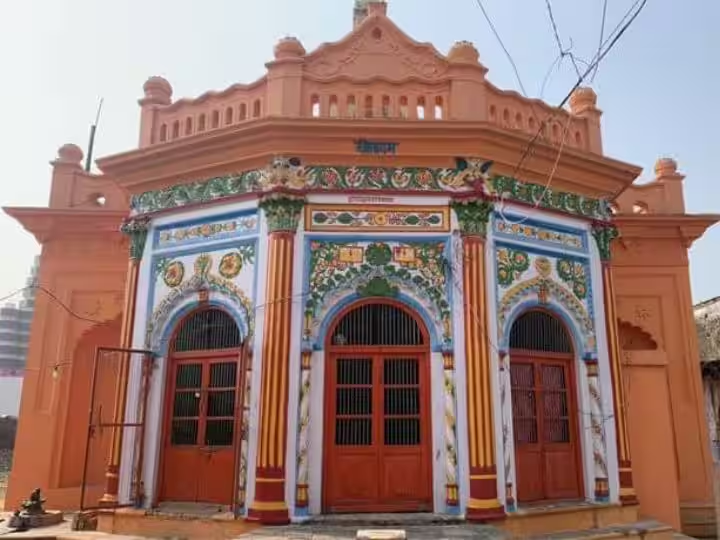
Raj Sadan is a historical landmark located 2.5 kilometers from Ram Mandir. Famous for its architectural beauty which attracts many visitors. The nearest railway station is Faizabad, which connects to all major cities. The structure was recently renovated by a film director.
12. Guptar Ghat
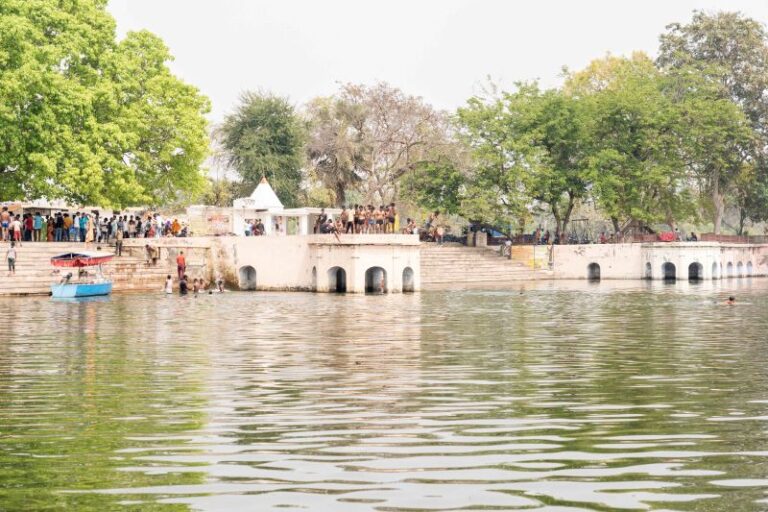
Guptar Ghat is a holy site on the bank of the Saryu River, known for its peaceful atmosphere. It is one of the most popular religious places located near Ayodhya. Devotees believe this is where Lord Rama took Jal Samadhi (water immersion) before departing for Vaikunth (heaven), making it especially sacred.
13. Tulsi Smarak Bhawan
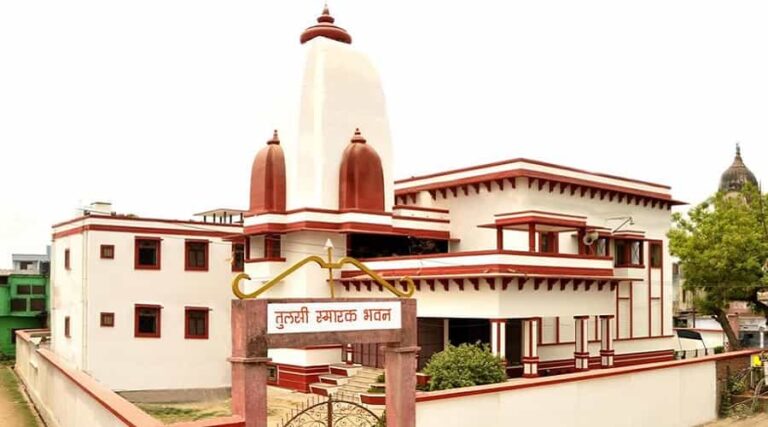
Dedicated to the great poet Tulsidas, this memorial bhawan is located at the eastern end of the National Highway at Rajgang crossing in Ayodhya. Built in 1969 to honor Goswami Tulsidas, who wrote the Ramayana in the form of Ram Charit Manas, the Smarak is a place where a vast collection of religious books can be found, particularly written by Tulsidas.
14. Bharat Kund
Also known as Nandigram, Bharat Kund is a village located 15-20 kilometers from Ayodhya. According to legend, while Lord Rama was in Vanvaas, King Bharat performed penance (Tapasya) here while waiting for Lord Rama’s return. The famous Bharat Hanuman Milan temple stands here today. People visit this pilgrimage site to perform shradh rituals and asthi visarjan, followed by a holy dip in the kund. It’s one of the notable places to visit near Ayodhya for those wanting to explore beyond the city center.
15. Ram Katha Museum
Ram Katha Museum is the second-biggest attraction in Ayodhya after Ram Mandir. Spanning 40,000 square feet, it is open daily from 10:30 AM to 4:30 PM and is located just 1.2 km from Raj Sadan. It’s one of the best places to visit in Ayodhya with family to learn about the cultural and historical significance of the Ramayana.
16. Ram Ki Paidi
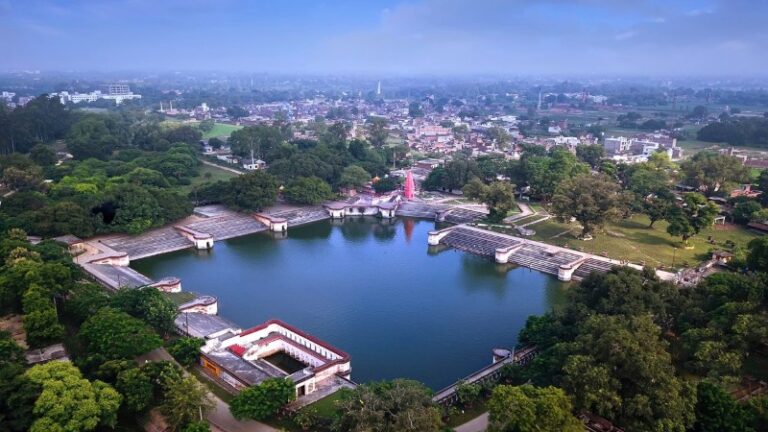
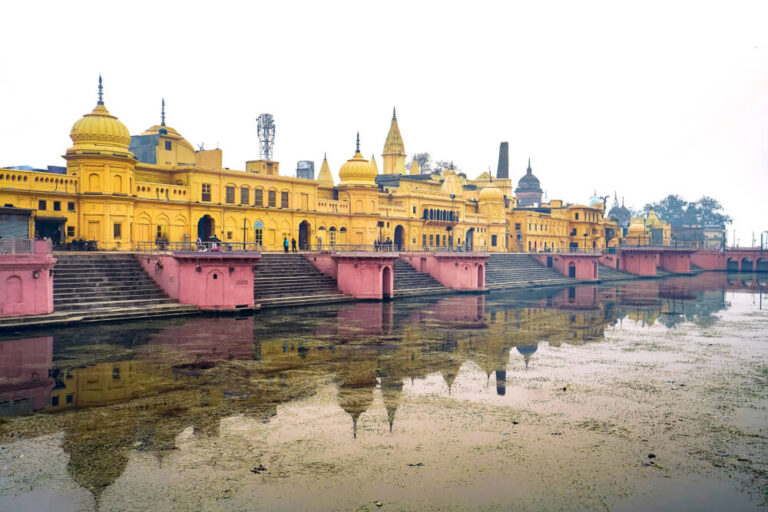
Ram Ki Paidi is a renowned ghat on the bank of the Saryu River where visitors take a holy dip believed to purify the soul. The area has been renovated by the government with the development of 25 ghats to enhance Ayodhya’s beauty. Ram Ki Paidi is especially famous during Deepotsav (Festival of Lights similar to Diwali), when thousands of lamps illuminate the area, and visitors can experience the Saryu Aarti.
17. Janki Mahal
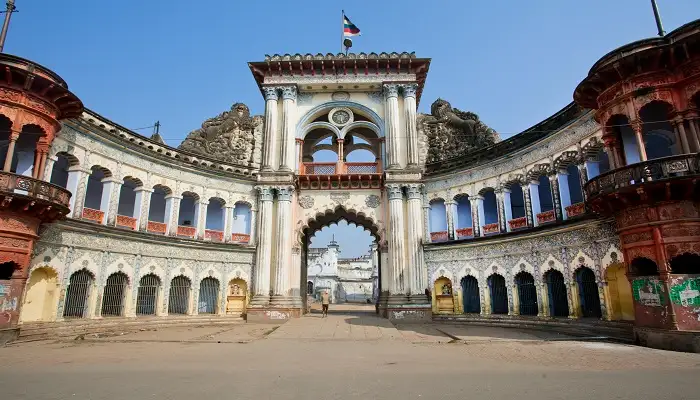
Also known as Janki Bhag, Janki Mahal is an ancient site in Ayodhya built by King Babu Genda Singh. Believed to date back to the Ramayana era, it displays a beautiful blend of Hindu and Mughal architectural styles. This popular tourist destination attracts visitors interested in its architectural splendor.
18. Lakshman Ghat
Lakshman Ghat is a sacred site dedicated to Lord Ram’s brother, Laxman. It is believed that Laxman performed his last rites here. Located on the bank of the Saryu River, devotees take a holy dip here to purify their souls. Visitors to Ayodhya typically visit all the ghats along the Saryu River.
19. Swarg Dwar
Swarg Dwar (Gateway to Heaven) is another ghat on the bank of the Saryu River, approximately half a kilometer from Ram Ghat. It is believed to be the place where Lord Rama’s cremation was performed. Visitors come here to take a holy dip and enjoy its natural beauty.
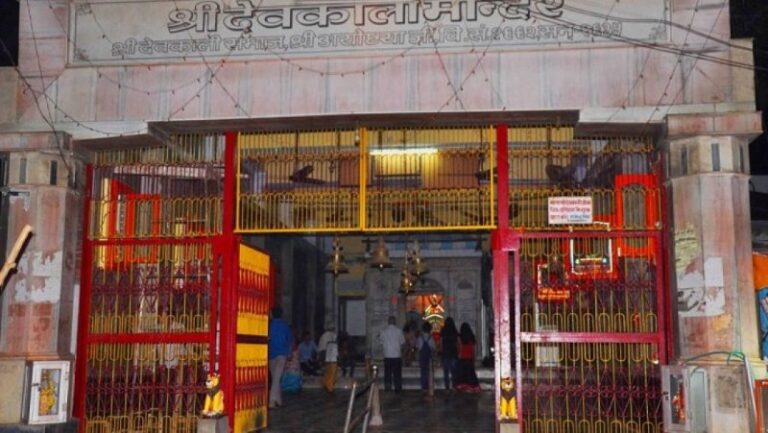
20. Chhoti Devkali Mandir
Located in the heart of Ayodhya, Chhoti Devkali Mandir is a significant Shakti Peeth built by King Dashrath for Mata Sita. Goddess Devkali is worshipped here by many families as their Kuldevi (family deity). Devotees visit with their wishes, believing that Mata Devkali fulfills them. It is one of the best places to see in Ayodhya.
Recommended Itineraries
Places to Visit in Ayodhya in 1 Day:
Morning: Start with Ram Janmabhoomi (the birthplace of Lord Ram), the central attraction of Ayodhya. After Ram lalla darshan, visit nearby Hanuman Garhi.
Afternoon: Enjoy lunch at a local dhaba, then visit Dashrath Mahal and admire its stunning architecture.
Evening: Witness the beautiful Saryu Aarti, take prasad, and visit nearby ghats along the Saryu River.
When planning places to visit in Ayodhya in 1 day, this itinerary helps you cover the most significant sites efficiently.
Places to Visit in Ayodhya in 2 days:
Day 1: Cover the top attractions – Ram Mandir, Hanuman Garhi, Kanak Bhawan, Dashrath Mahal, and Saryu Ghat.
Day 2: Explore lesser-known but important places to see in Ayodhya connected to Lord Ram in the Ramayana:
First half: Visit Tulsi Smarak (museum) and Guptar Ghat
Second half: Visit Kanak Bhawan, Mani Parbat, and Sugriv Parbat
Best Time to Visit Ayodhya
The best time to explore Ayodhya is from October to March when the weather is cool and pleasant, making it easier to visit all the famous spots. Although the city stays busy year-round, these months offer the most comfort. Try to avoid major festivals like Ram Navami and Diwali, as the crowds can get overwhelming.
How to Reach Ayodhya
Ayodhya is well connected with all means of transport either by air, train or road. By Air:
Faizabad Airport: Located 7 km from Ram Mandir. Taxis, cabs, and autos are available to reach the temple.
Chaudhary Charan Singh Airport (Lucknow): 140 km from Ram Mandir. Taxis and cabs are available for transport.
By Train:
Ayodhya Junction: Well-connected to major cities like Mumbai, Delhi, and Jaipur. It’s just 1 km from Ram Mandir.
Alternative Stations: Faizabad Junction and Darshan Nagari Railway Station.
By Road:
Major Highways:
Yamuna Expressway
Agra-Lucknow Expressway
National Highway 27 (NH-27) towards Ayodhya
Tips for Travelers Visiting Places in Ayodhya
Ayodhya gets extremely crowded, especially during festivals, so safeguard your belongings and keep track of your companions.
Book your accommodations in advance.
Visit between October and March when temperatures are more bearable.
Limited parking facilities are available near the temple. Consider parking at your hotel if it’s secure.
Local food is readily available, but carry some snacks as a precaution.
Respect local language, culture, and customs.
Ayodhya dham is a divine city that represents a beautiful blend of emotions, spirituality, and culture. With Ram Mandir as its crown jewel, it has become one of Uttar Pradesh’s top tourist destinations, attracting millions of devotees who explore the entire city. For those looking for places to visit in Ayodhya with family, there are ghats, temples and museums one can visit.
So Plan your visit thoughtfully – Ayodhya Dham awaits to provide you with a divine and historical experience.
Yes, it’s possible to visit Ayodhya’s key sites in one day with proper planning. A well-organized itinerary for places to visit in Ayodhya in 1 day should include Ram Mandir, Hanuman Garhi, and Kanak Bhawan as the primary attractions.
Ayodhya is not a hill station, but you can visit mild hill areas like Sugriv Parbat and Mani Parbat. The banks of the Saryu River offer beautiful natural views. For more extensive hills, you would need to travel to places to visit near Ayodhya in neighboring regions.